
“I can’t help myself…bad habits.”
It’s a line from an old song that still rings true. You cannot help yourself; whether the habit is good, like drinking a glass of water when you first wake up, or bad, like reaching for the ice cream tub when your favorite TV show comes on.
Either way, they are automatic or unconscious. That’s one reason ‘bad’ habits are hard to break. You don’t realize you’re doing them, and before you know it, you’ve polished off a pint of ice cream.
So, how do you form good habits or break bad ones? Let’s dive in and explore the world of habits.
Habit Formation
Your brain drives the formation of new habits, such as consistent training, healthier eating, and increased movement. You’re making conscious decisions and relying on willpower and motivation. That’s why new ‘good’ habits feel harder: they are not yet unconscious.
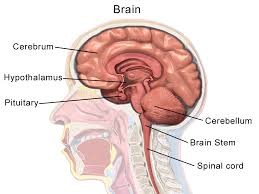
With repetition, something switches. Control shifts to the basal ganglia, the brain’s efficiency department, the part that runs routines and patterns. Once it recognizes a repeated behavior, it turns it into a neural system shortcut. Less thinking, less effort, but more automatic.
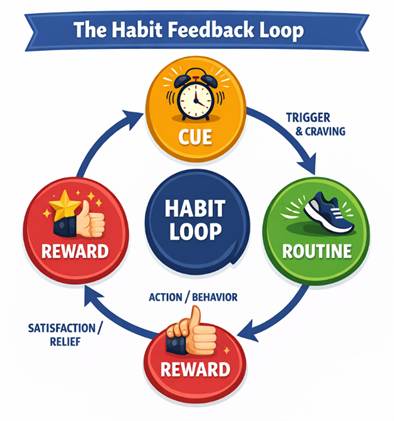
Then the habit feedback loop locks in: Cue → Behavior → Outcome. It’s more complicated than that, but for the sake of this discussion, let’s keep it simple.
Your brain doesn’t care if the habit is “good” or “bad”; all it cares about is whether it saves energy, reduces stress, or delivers a reward. When you’re stressed, your habitual brain takes over because you don’t rise to your goals; you fall to the level of your habits.
Dopamine plays a significant role here, but not in the way most people think. It’s not a pleasure chemical but a learning signal. Over time, dopamine fires before the behavior, when the cue appears, which is why you feel pulled to act before you consciously decide.
Often, the best way to form good habits is not to try harder but to make them easier to repeat, even on your bad days.
How To Form Good Habits
The nervous system wires habits through repetition, not intensity, and that’s why starting small matters. Something as simple as drinking a glass of water before dinner lowers the mental barrier to entry and gives your brain an easy “win” to repeat. Small habits like these, when you’re trying to change a bigger habit, such as overhauling your nutrition, work best. Small actions create less friction, making it easier for the brain to form an unconscious habit.
Habits don’t stick because you’re perfect; they stick because you keep going. Missing a day is not a huge deal, but if you miss twice, the neural pattern weakens. Repetition is what shifts control to the basal ganglia, where behaviors run on autopilot.
Here are some more tips on forming good habits.
Clear intentions: These give the habit more meaning, and our brains are more likely to repeat behaviors that feel purposeful. “Losing weight” is vague. “Having more energy to keep up with my kids” creates emotional relevance, which may increase follow-through and reinforce learning signals, such as dopamine.
Celebrate all wins: Getting your pompoms out to celebrate small wins matters more than you think. Every rep, step, or extra five minutes is feedback to the brain that says, ” This is worth repeating.” That positive reinforcement strengthens the neural pathway and sustains momentum.
Make it easy: The glue that holds it all together is your environment. When stress is high, the brain defaults to what’s easiest. Pack your gym bag the night before, and throw away your trigger foods before they become a problem. Make the right choice a simple one.
One at a time: Last but not least, start by changing one habit at a time, because changing two things at once can overwhelm your system.
Getting Rid Of Bad Habits
Why do people return to their old habits so often? It’s because the neural pathways established by the habits we develop never get deleted. Those pathways are always there for us if we need to use the same routes again, whether these are good for us or not.
Since these neural pathways never get erased, the best way to change habits that are not good for you is to replace them with new ones.
Every habit follows the same pattern: cue, routine, reward. To help yourself break a bad habit, you don’t need more willpower; you need to interrupt that loop, to ‘rewire’ your brain. To give up smoking, I replaced the act of smoking a cigarette with either drinking a glass of water or chewing gum. Whenever I got the urge, and my thinking brain kicked in, I did that.
When I got bored and wanted to reach for a smoke, I played with my keys.
Putting friction between you and the habit makes the trigger harder to access. Your brain already expects something to happen, so give it a better option. That’s what I did when replacing one thing with another.
Then upgrade the reward. I replaced smoking with food if I got through a day without smoking. I figured putting on weight was better than being six feet under.
Placing a pause between the trigger and behaviors also works. One breath, one question, one moment of awareness can pull you out of autopilot and back to your thinking brain and away from your habit brain. That’s how habits change, not by fighting the brain, but by retraining it.
Wrapping Up
You really cannot help yourself at times, but with a bit of time and effort, you can train your brain to help yourself. I’m far from perfect by any means, but by being kind and persistent, I have many more good habits than bad ones.
Now, it’s your turn.
Leave a Reply