
Building a balanced meal with your hands isn’t just another meal plan. It’s a skill you can develop.
Some people don’t struggle with nutrition because they “don’t know what to eat.” They struggle due to inconsistent meal times and portion control. Then the usual solution of tracking, strict rules, and cutting foods often falls apart when you’re under stress and hungry.
The Precision Nutrition approach solves that with a simple idea: build a balanced plate with your hands, using visual guides instead of math. You don’t need Instagram-worthy meals—you need a structure that works on your worst days.
Here, I’ll show you how to build a balanced meal using the PN1 hand-portion method—so you can eat in a way that supports your goals without obsessing over calories or following restrictive diet rules.
The PN Plate Method
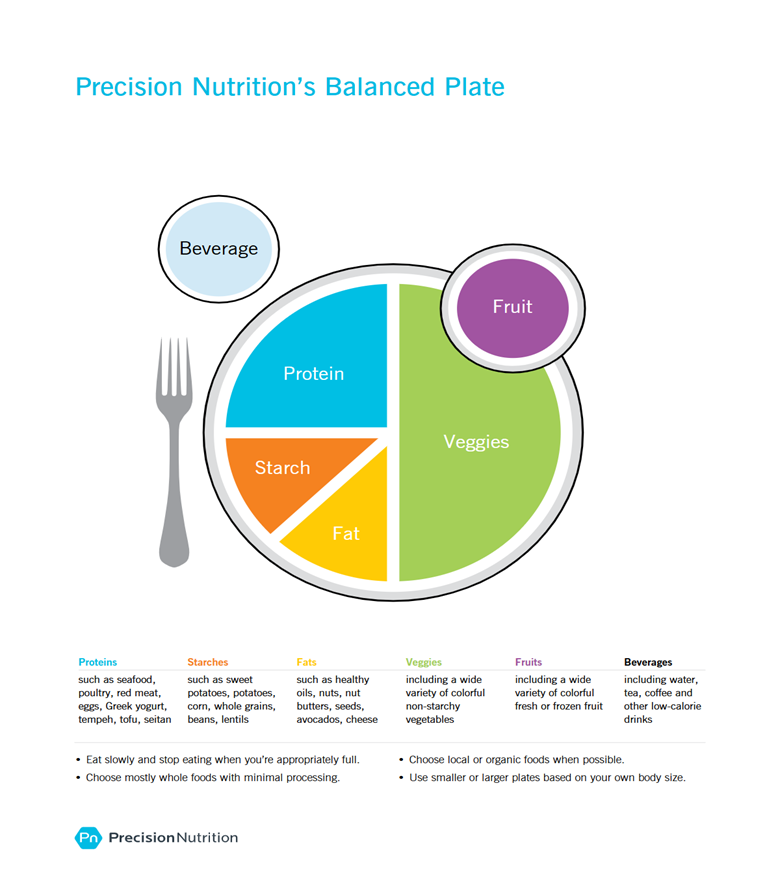
Before getting into hand portions, let’s zoom out and look at the “big picture.” Precision Nutrition builds a plate with the major nutrients represented, then adjusts as needed.
A balanced plate includes:
- Protein (the anchor)
- Veggies (volume + nutrients)
- Starch/carbs (fuel)
- Fat (satiety + flavor)
- Fruit + a low-calorie beverage as helpful add-ons
PN keeps the guidelines simple:
Eat slowly and stop eating when you’re 80% full.
Choose mostly whole foods with minimal processing.
Choose local or organic foods when possible.
Use smaller or larger plates based on your own body size.
Next, we’ll take this plate and make it practical for use anywhere with the PN1 hand portion method.
Why Hand Portions Work
Instead of weighing food or counting calories, you use your hand as a measuring cup—because it scales with your body size. The hand method is more “you-sized” than generic portion advice. Hand portions give you a consistent starting point so you can:
- build meals faster
- stay satisfied longer
- adjust based on feedback (hunger, energy, progress)
Here’s the simple structure you’ll use to build almost any meal.
Protein: the size of your palm: 1–2 servings per meal.
Non-starchy veggies: the size of your fist: 1–2 servings per meal.
Carbs: size of your cupped hand: ½–⅔ cup of carb-dense food, 1–2 servings per meal
Fats: size of the tip of your thumb: 1–2 servings per meal
Quick note (if using your hand feels awkward)
You don’t have to. The hand method is just a portable guide. If you’d prefer to use measurements, use these rough equivalents as your starting point:
Protein: ~4 oz cooked (or 1 scoop protein powder)
Non-starchy veggies: ~1 cup
Carbs (starches): ~½–⅔ cup carb-dense foods
Fats: ~1 tablespoon
These are starting points, not rules. You’ll build the plate, eat slowly, stop when you’re full, and adjust over time based on feedback.
Step-by-step: Build your plate
Now let’s put this into action.
Step 1: Choose your protein
Pick 1–2 palm-sized portions or ~4 oz cooked per serving. Protein makes meals more satisfying. Examples include seafood, pork, poultry, red meat, eggs, Greek yogurt, tempeh, and tofu.
Step 2: Add non-starchy veggies
Add 1–2 fist-sized portions or 1 cup per serving. This is where you get volume, fiber, and micronutrients from a wide variety of colorful non-starchy vegetables.
Step 3: Add carbs/starch
Add 1–2 cupped-hand portions, or ½–⅔ cup per serving, depending on your activity levels. Examples include sweet potatoes, potatoes, corn, whole grains, beans, and lentils.
Step 4: Add fats
Add 1–2 thumb-sized portions or 1 tbsp per serving. Fats help with satisfaction and make meals taste good. Examples include olive oil, nuts, nut butters, and seeds.
Step 5: Optional: fruit + a low-calorie beverage
Fruit and beverages are part of the PN plate framework, too:
Fruits: A wide variety of colorful fresh or frozen fruit.
Beverages: water, tea, coffee, and other low-calorie drinks
Next, I’ll show you the 3 PN plate templates and how to choose the right one for your day.
The Plates In Action
Choose the Balanced Plate for the simplest meal. You’ll get steady energy and satiety by including protein, colorful non-starchy vegetables, starches, and fats—plus fruit and a low-calorie beverage. Treat it like your go-to meal when nothing special is going on.
Choose the Balanced Plate when…
- It’s a normal day (moderate activity, typical schedule)
- You want the most “set it and forget it” option
- You’re not sure what to pick
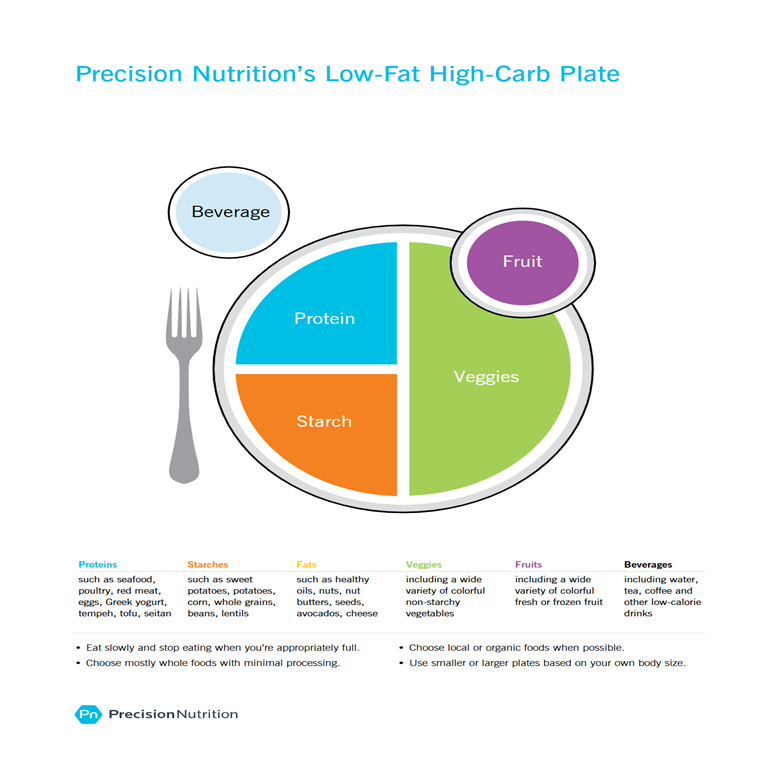
Choose Low-Fat, High-Carb when you need more fuel—think hard training days, lots of steps, cardio, or when you need to perform. This plate shifts more of your energy budget toward carbs and less toward fats, while keeping protein and veggies the same.
Choose the Low-Fat, High-Carb Plate when…
- You’re training hard.
- You want better performance and recovery.
- You notice you’re feeling flat, low-energy, or extra snacky if carbs are too low.
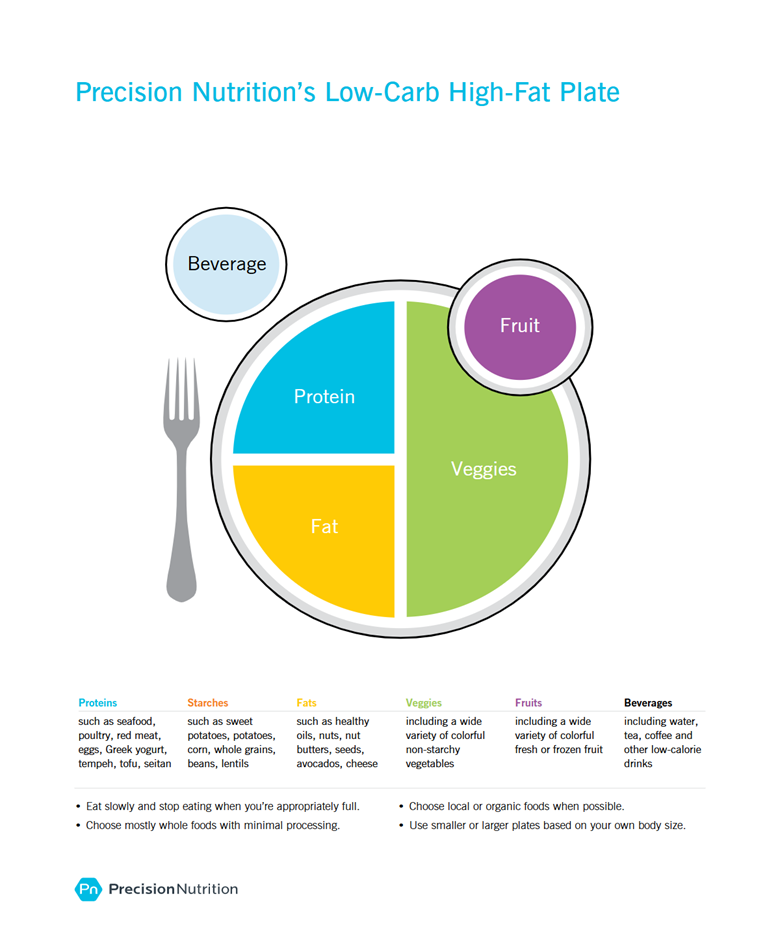
Choose Low-Carb, High-Fat on lower-activity days. You’re still building the plate around protein and colorful veggies, but you’re swapping some carb portions for fat portions—useful when you don’t need as much fuel.
Choose the Low-Carb, High-Fat Plate when…
- It’s a lower-activity day.
- When you need a steadier appetite and fewer energy swings
How to Adjust Portions
The above is a starting point you can refine based on feedback. PN’s motto is there’s no failure, only feedback. Keep that in mind when you’re chucking diet rules.
Start Here
For most meals, start with 1 serving of each using your hand portions (or the ounce/cup/tbsp equivalents). Then hold that steady for 7 days before making any changes.
Then, depending on whether you’re hungry again too soon, such as 2 hours after a meal, add one portion to your next similar meal:
- +1 protein serving or
- +1 carb serving (especially on training days)
- or +1 veggie serving
If you feel overly full, heavy, or sluggish after a meal, remove one portion next time:
- -1 fat serving or
- -1 carb serving
If energy and workouts feel flat, shift to the Low-Fat, High-Carb plate on training days or add
- +1 carb serving around the meal before/after training, but keep protein the same
But when cravings are high at night, or you feel “snacky” often, it’s one of these:
- You under-ate at meals (add protein or carbs)
- You didn’t get enough volume (add veggies)
- Meals were low in satisfaction (ensure some fat is present)
If fat loss stalls for 2+ weeks and you’ve been consistent, don’t cut everything. Choose
- Removing 1 carb serving from 1–2 meals per day or
- Remove 1 fat serving from 1–2 meals per day and keep everything else the same for 7–14 days, then reassess.
Wrapping Up
The goal here is not to create a perfect way of eating but one you can sustain on your busiest, messiest days. It’s to give you a repeatable structure that supports your life and goals. Consistency beats intensity. Skills beat rules, and building a solid plate makes healthy eating easier.
If you want a step-by-step system that makes this effortless, my 30-week Nutrition Course teaches you how to learn these skills in phases—so you’re not relying on motivation or willpower.
You’ll learn how to:
Build balanced meals using hand portions (without tracking)
Adjust your plate for training days vs rest days
Eat with more awareness (so you actually recognize “enough”)
Stay consistent through stress, travel, weekends, and real life
If you’re ready to stop dieting and start building skills, email me “30 WEEKS” and I’ll send you the details.
See you on the other side.
Leave a Reply